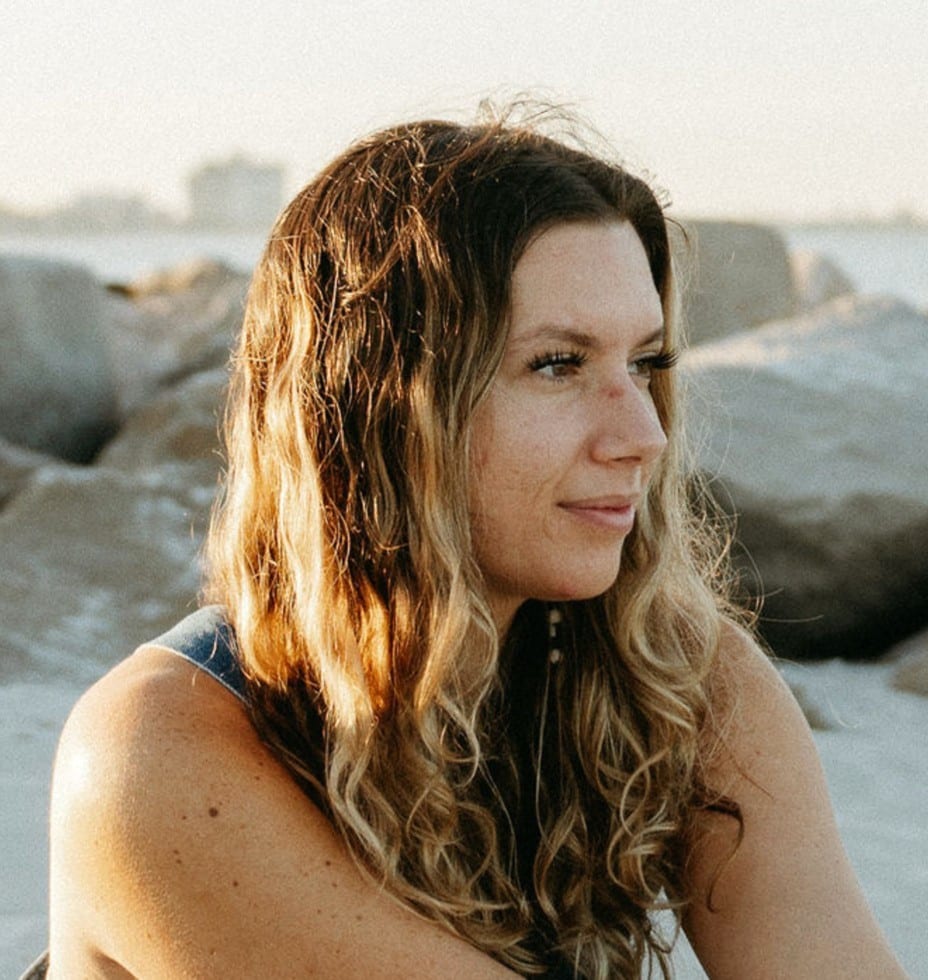
Molly Rose
Moving, Writing, and Showing Up: A Conversation with Molly Rose Finotti
Longform interview series: Insights and practical advice for your life, health, and business.
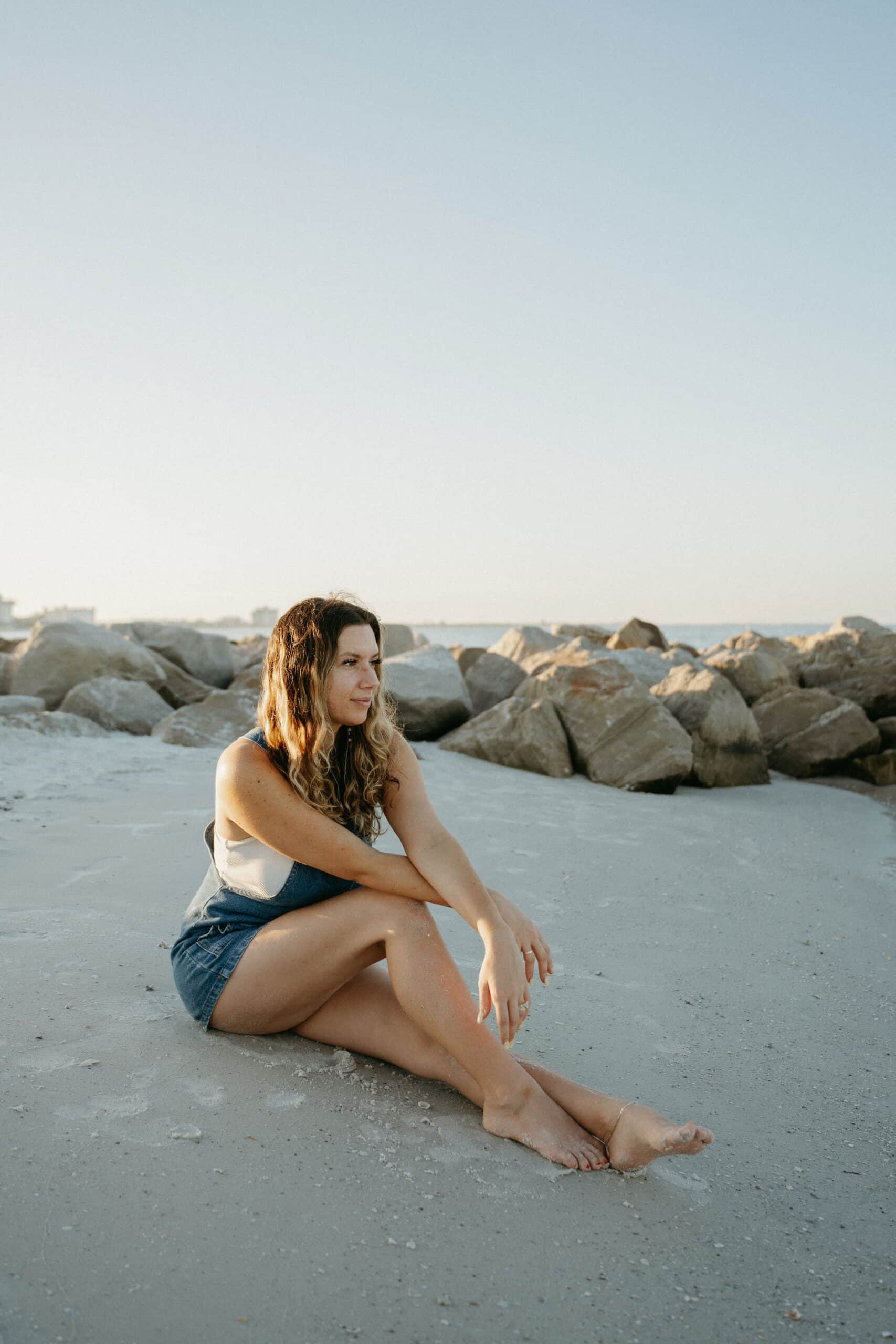
Molly Rose is a yoga teacher, certified health coach, and somatic facilitator. Her private practice is Mama Soma, and she leads the Move Love workshops, which pair movement with writing. We talked about her path into teaching, how she works with the body, and why she wants people to go out and live their lives.
Whether you’re a yoga and wellness enthusiast who wants to go deeper, or an entrepreneur, creator, or builder trying to keep your spark alive without burning out, Molly gives honest and practical advice that is sometimes uncomfortable (in the best way).
In this interview, Molly shares how she:
- traded 5 a.m. studio-opening shifts for a free membership, then taught 1,500+ classes in her first year as a certified teacher
- uses movement, breath, sound, and writing to “move the sludge out” and let clarity settle
- turned a dislocated knee and months of teaching without demonstrating into a sharper and clearer teaching voice
- tells “uncomfortable” from “injurious,” on the mat and in life
- builds a heart-led business with integrity, including why taking a part-time job isn’t a failure

Anthony Mandela (AM):
Molly, let’s jump right in! How did you find your way into the wellness world, and what led you to the front of the yoga room?
Molly Rose (MR):
I didn’t come from a sports or fitness background, none of the usual gateways into teaching. At 16, I accidentally took a hot yoga class down the street from my high school, and something happened inside me. I wasn’t a “worker outer,” and I was very disconnected from my body. That class let me feel something for the first time, maybe ever, so I kept going back.
It became a regular practice. I built a relationship with the studio owners, and since I was broke, we worked out a trade. I’d open the studio at 5 a.m., work the front desk, and come back for the noon and evening classes in exchange for a free membership. I just ate it up; it was exactly what I needed. That new connection to my body also made me curious about what I was fueling it with, because I grew up on a standard American diet with very little conversation about food as fuel.
I knew I was meant to teach. I had never felt such a strong inclination in my life. But I was putting myself through college, and I couldn’t afford a $3,000 training. When one came up in my early twenties, I couldn’t commit, and it was a heartbreaker.
I ended up finishing a journalism degree around this time, which is where my writing background comes from. It didn't take me long to realize the police-beat-and-local-weather route wasn’t for me, so I decided to go back to school for nutrition and became a certified health coach through the Institute for Integrative Nutrition. Along the way, I started cooking on yoga retreats, cooking for teachers and guests in exchange for a free spot. I was the back of house person.
AM:
How did your journey evolve from that point onward?
MR:
Well, In 2020, I found a training with a teacher I deeply respected, which I think is essential, and I decided there would be no more waiting. I already had a private practice with nutrition clients, so once I got certified, I never looked back. I didn’t treat it as a side hustle. I applied to every teaching gig I could find: in offices, in libraries, and at what ended up becoming my first studio. I said yes to everything ~ the 5 a.m. classes, the doubles, the Sunday nights, the classes nobody wanted. In my first year, I taught more that 1,500 classes! I’m so proud of that girl, because she was doing it for the 20-year-old me who felt purpose for the first time.
That’s why my path looks accelerated. I’ve only taught full time as a certified teacher for six years, but I was an undercover yoga teacher for over a decade. The iceberg goes much deeper. My retreat experience, my LLC, and my private practice all translated into the yoga world.
What I think makes it work is sincere devotion and the humbleness I feel when I’m with my students. Every time I sit at the front of the classroom, it feels like waking up to my children and thinking, “I’m so lucky.” I won’t take that for granted, and I hope my students feel the same reverence I have for them.
AM:
I can tell you from taking your classes in the past that your authenticity comes through. You’re so devoted to your students, and I can tell teaching is such a joy for you. I think that’s a big part of why you’ve become an “overnight success,” if you will. One follow-up: you mentioned a moment in class when you knew you were meant to teach. How did you know?
MR:
This is profound to reflect on, because it was so long ago and a little blurry. Was it one moment or a collection of them? Either way, it was direct; it wasn’t a slow burn. It felt like being underwater and coming up for a big breath, realizing something that had always been there but I’d never seen before. It felt divine.
I’m passionate by nature. I wanted to be a fashion designer, a journalist, and a marine biologist. But this felt like passion with certainty. It’s the way I teach now. I don’t plan my classes. I walk in, close my eyes, feel the room, and surrender to what the group needs and what wants to come through me.
AM:
Did doubt ever creep in, especially when that training you wanted wasn’t possible initially?
MR:
Not genuine doubt. It was heartbreaking to miss the initial training opportunity, but I surrendered to the timing. I always had faith it would work out when it was right, and I never felt defeated. That feels divine to me, too.
Coming Home to the Body
AM:
Molly, you’re more than a health coach. You work with people’s bodies, spirits, and health. How do you guide someone who doesn’t have that career and life certainty that you’ve experienced and is searching for direction?
MR:
I’ve worked with hundreds of women, one-on-one and in group cohorts and mentorship programs. Every journey is different, but it helps to have a container. It starts with coming home to the body, our soma, which is Latin for “of the body.” That’s where my business Mama Soma Healing Arts gets its name.
The body holds memory, trauma, and subconscious beliefs, along with well-worn nervous system patterns. Some of us flee when things get too good. Some fight back when we feel challenged. Others shut down, or people-please until we’ve lost our identity. So I start by helping someone feel safe in their body.
It’s slow work. Clients often stay with me for years while we chip away at that sense of safety. We use movement to get there: yoga asana when it fits, plus looser somatic practices like shaking and bouncing, or gentle touch meditation. And we do it in relationship, because we’re relational beings. I’m always working with my own teachers and mentors because I need people to mirror me and remind me that I’m strong, wise, and not broken when I’m angry. It all comes back to returning to the body with curiosity, compassion, and connection.
"It all comes back to returning to the body with curiosity, compassion, and connection."
AM:
Beautiful. I want to talk about your writing because you’ve combined it with movement in a way I find incredibly unique. How did you bring the two things together?
MR:
Writing clicked for me in a creative writing class in my freshman year of high school. I’d always journaled, but that class helped me find my voice and use writing to explore subconscious material. I became editor of my high school newspaper and won a few awards. Once I got that feedback, I went all in on a journalism major.
Then reality set in, and I knew I couldn’t do the police beat at a local paper. But I kept writing: poetry, journaling, old-school blogging. It was my way of healing and getting clearer than conversation, or even therapy, could. When I became a facilitator, marrying movement and writing just made sense.
First, we move the “sludge,” our everyday conditioning. Did I take the chicken out of the freezer? Did I schedule the dentist? Oh no, I owe like 300 text messages! Then there are the judgments we carry: I’m too old, I’m not loud enough, there’s no space for me. All of that gets jammed in the body.
Then, we let it settle. Move Love is movement and settling. Sitting in the quiet is harder than a million burpees for many people. It’s like the white noise machine we run for the baby. When it turns off, the quiet is louder than hurricane mode. Once the dust settles, what wisdom, clarity, forgiveness, or curiosity can come up?
This isn’t woo-woo stuff. We’re physiologically moving things out through breath, sound, movement, and sweat. Then we rest deeply and end with a guided writing session. I offer prompts every few minutes and leave plenty of space for you to get curious and write.
"We’re physiologically moving things out through breath, sound, movement, and sweat."
AM:
Before I took that workshop, I hadn’t connected writing with how you feel in your body. Afterward, I wanted to do more pen-to-paper writing, and I’ve kept it up. I’ve been writing more long-form over the last year or two. I wanted to mention that the way you blend movement, prompts, and silence is healing, and I think it’s especially necessary in this modern age. I’m thankful you’re continuing this work, and I encourage anyone reading to check out Molly’s offerings!
What do you most want people to know about how you help others?
MR:
I’m so moved that this experience stayed with you. That’s my goal. I want people to take what they’ve learned, integrate it, and fly (like our children). I think we’ve lost the plot in the wellness field, as if people need to be healing constantly. Go dance. Touch trees. Swim in salt water. It’s not about the next therapist or the next me. So, honestly, don’t hire me. Use that money to book a flight or sign up for a pottery class.
Why Retreat Matters
AM:
I feel the same way. Go talk to a human being, write your thoughts down, get outside. That connects to retreat, which we both care about. What does it mean to you?
MR:
A retreat can sound frivolous, like a vacation. And yes, the setting is beautiful, someone’s cooking for you, and it’s a privilege. But I see retreat as a verb. It’s the pause where the white noise machine turns off and you can hear yourself more clearly.
My favorite part is the group. Ten, twelve, fifteen, twenty people who didn’t know each other come together—some sharing a room or a space for the first time—and leave as friends. The choice to be taken care of becomes part of you. It’s like learning that a workshop of mine from years ago stayed with you. The goal isn’t to sell a four-day vacation. It’s to pull you out of the monotony of everyday life in a caring setting, and let it settle so you can take it home.
AM:
When I started doing this years ago, I didn’t understand how powerful those connections would be. You never know who will make friends with or who will open up in a way they never have before. These deep connections happen every single time, and it’s one of the main reasons I keep doing this. I see retreat as a verb. It’s the pause where the white noise machine turns off and you can hear yourself more clearly.
"I see retreat as a verb. It’s the pause where the white noise machine turns off and you can hear yourself more clearly."
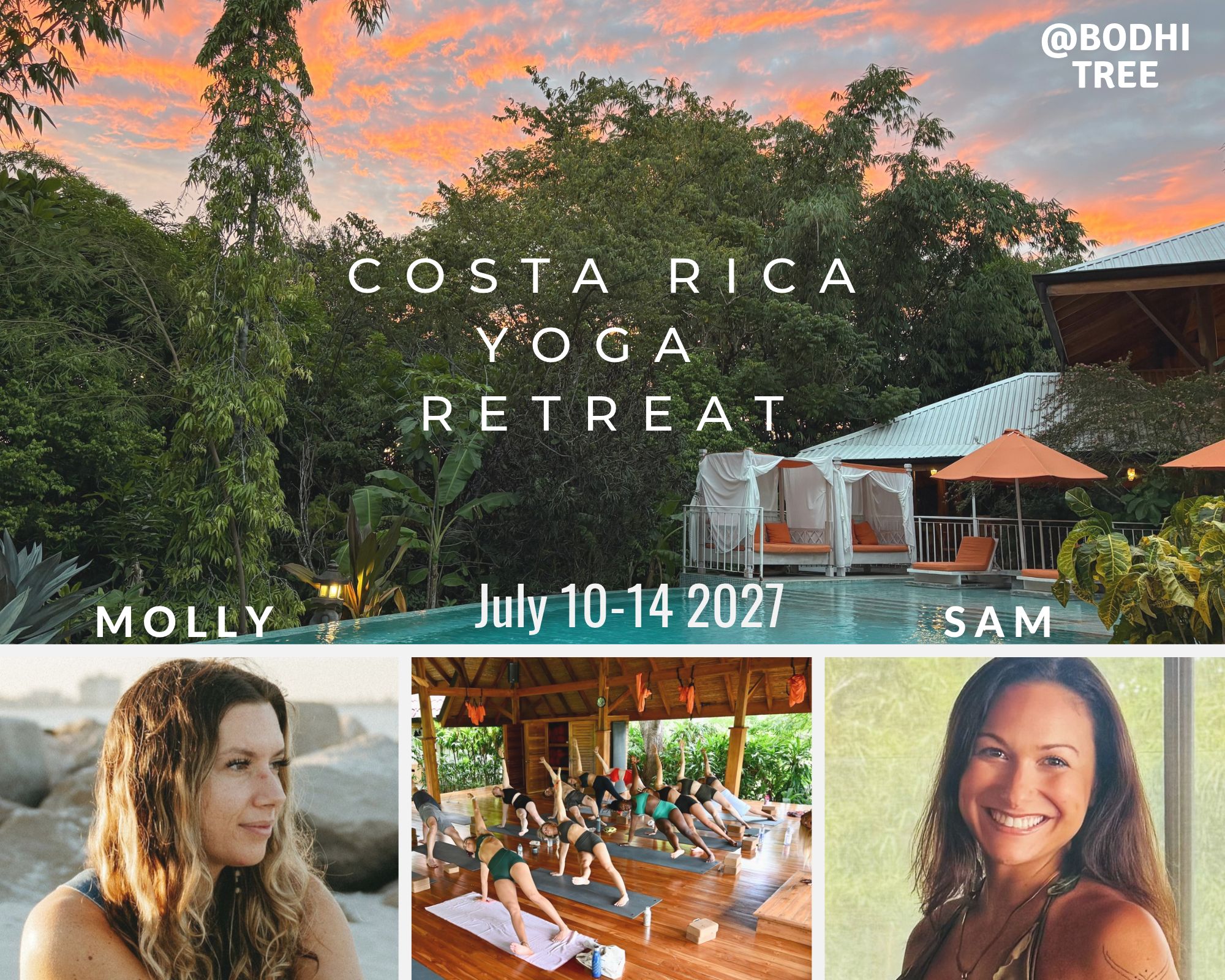
Our Retreat Venue~Bodhi Tree
AM:
You’ve worked with so many students over the years, and you’re always learning from them. Has anything stuck with you?.
MR:
I feel so lucky that it’s hard to be concise. I lead with openness and vulnerability, hoping it invites others to do the same, and the stories people share leave me in awe. Thing like…“I cried for the first time in years in your class.” “I quit my job and pursued my passion.” “I let myself be loved.” One client felt her body was broken and betraying her. After a couple of months working together, she got pregnant, and now she has a beautiful baby.
The thread through all of them is coming home to the body and letting go of what life was supposed to look like. What moves me most is the courage, mine and theirs, to see and be seen. For most of my life, I wanted to disappear until I found yoga. When I started teaching, I let go of my fear of being perceived. I never adopted a “yoga voice.” I accepted the risk of judgment, the risk of failure, and the risk of not being for everybody by fully committing to being myself.
Befriending Discomfort
AM:
I really like what you said about risk and discomfort. Growth means being comfortable with a certain level of discomfort. How does that show up in your work?
MR:
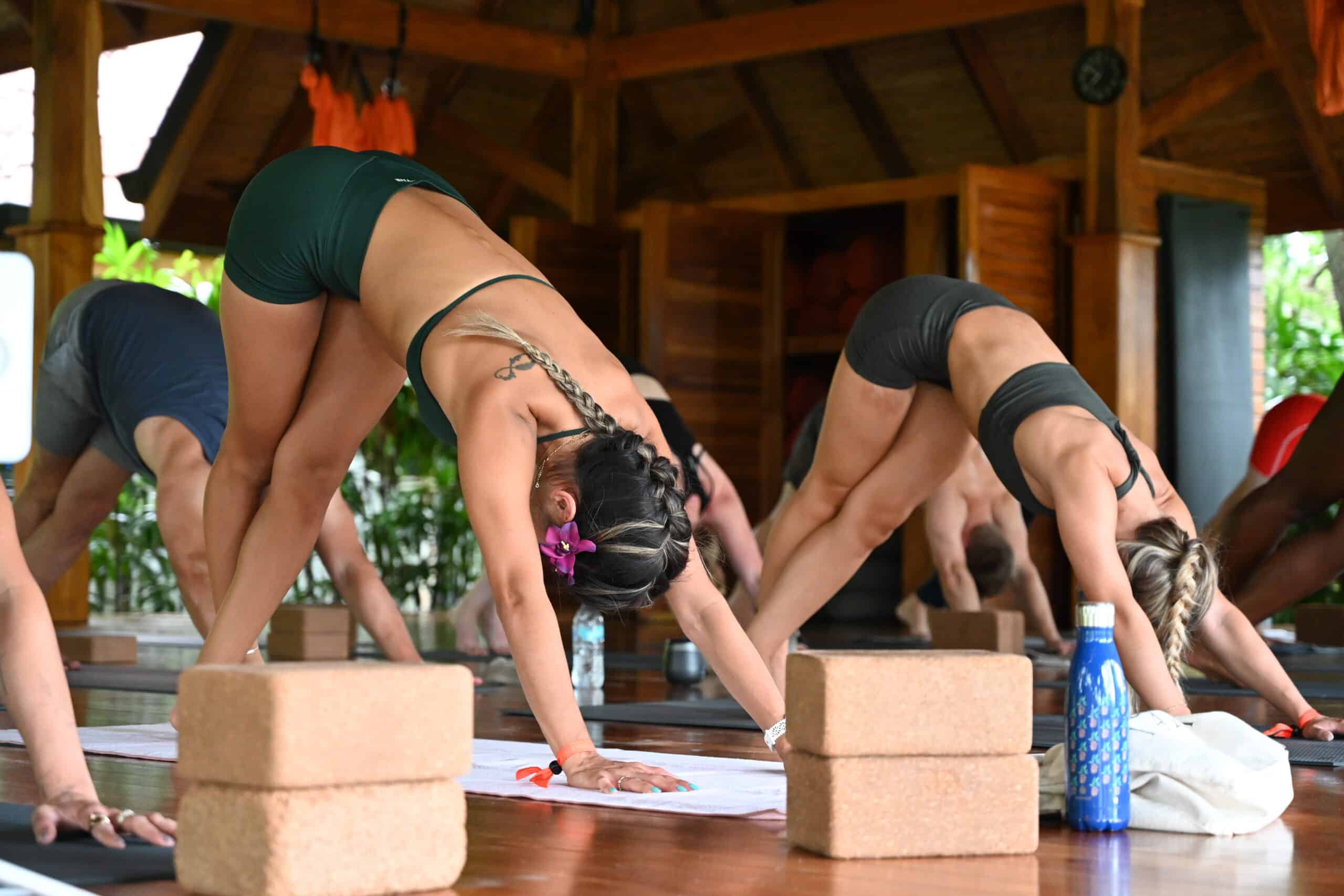
So much of my work is befriending discomfort, and that’s where it all comes back to yoga. Asana is a metaphor for the larger eight-limbed path. Hold chair pose for ten breaths while you hate me. You notice you’re holding your breath and clenching your jaw. Can you stay and breathe more fully? Can you deepen the posture but soften your jaw?
Life is going to break your heart. It will bring loss, disappointment, and frustration. There have been times when I thought, “I’m a good yogi. I do all the right things. Good things are supposed to happen.” It doesn’t work that way. We don’t practice to avoid pain. We practice to build internal scaffolding, so that despite everything, I can write a poem, my baby will laugh, and my class will look each other in the eye, move, feel our breath, and know we’re alive. It’s a nonstop duality.
AM:
Internal scaffolding is exactly right, and it helps you read your body, too. Is this a good discomfort I should lean into, or is my body saying “no, get away”?
MR:
That’s something I say a lot. Is this uncomfortable, or is it injurious? Can I set my ego aside and put my knee down in a lunge? When I’m attuned to my body’s language, I can tell “I’m tired” from “this is gnarly.” We’re not avoiding hard things. Example: Childbirth is hard, and it’s worth it. There are so many through lines in life where yoga can hold us.
AM:
And none of it is performative. You’re not doing it to show off. It’s about what’s healthy for you, and you help people guide themselves. In your own daily life, is there something you come back to that sets the tone for your well-being?
MR:
Before kids, I had a structured sadhana, the yogic word for daily practice: an hour of meditation, asana, writing, and breathwork. Now, when I need to reset, I put on a song and dance to get the energy flowing. Sometimes I write a little, though often I don’t. A lot of my practice shows up in class. I’m holding the space, but I’m a student right alongside everyone else.
In the tantric lineage, I’m what you’d call a householder, not someone in an ashram. I have young children at home clamoring for my attention, groaning in my ear, etc., so how do I find the yoga right now? The first yoga sutra says that yoga is now. So I ask myself, can I feel the boundary of my body, where the air touches my skin? Can I know I’m separate from these elements but also tethered? It’s less about one practice and more a constant reminder of my aliveness and the richness of this moment.
AM:
Your interests outside of yoga shape your classes in a unique way. What fills your life beyond the studio?
MR:
Right now, motherhood. I have a three-year-old and a five-month-old, and I’ve wanted to be a mama since I was a little girl. I’m living my dream and enjoying it, chaos and all. When I started teaching, I felt more like myself than ever. Motherhood has only deepened that.
My free time goes to my daughters, my husband, and my friends. I’m an only child, so my friends are my family. I’m a beach girl, and I love writing, art, and museums. Motherhood lets you be a kid again. We do arts and crafts, we sing, and we have dance parties in the living room, since I used to love going out dancing. A coffee outside with the sun on my face is my little luxury. I also love teaching and seeing my regulars, some of whom have practiced with me multiple times a week for five years.
I might not have hobbies like painting or knitting right now, but my priority is to remember that I’m alive, every day.
Progress, Setbacks, and Teachers
AM:
What advice would you give someone who’s practiced for a few years, started coming to your classes, and wants to progress?
MR:
I’m not here to keep people comfortable, so I’d ask some uncomfortable questions. What’s your goal? Is it to touch your toes? To get your heels down in downward dog? To stop having back pain when you play with your grandkids? To understand your patterns of avoidance or self-sabotage?
There are many reasons people come to a boutique studio, and they all lead inward. Even if you came for abs or a cool-looking pose, if you keep coming and your mind begins to open, which is what the physical practice was meant to do, you’ll find that connection to your inner self. So I’d ask, what’s your goal, and how do you measure progress? My one-size-fits-all advice is to keep coming back.
"My one-size-fits-all advice is to keep coming back."
AM:
Keep coming back. I love that. Would you be comfortable sharing a significant setback and what you learned from it?
MR:
In 2022, I was at the top of my game. I was teaching, taking lots of classes, and feeling balanced and inspired. Then I fully dislocated my knee. Thank God there were no tears, but I needed surgery. I’m hypermobile, which can be part of the problem. I was out of movement for months, and even afterward I moved with a lot of fear. I was devastated. I’m a full-time yoga teacher, and I couldn’t move.
For the first time, I taught propped up with blocks, bolsters, and blankets, with my knee in a brace. I taught about 18 classes a week without moving or demonstrating. My language and cueing became so much clearer, because I was watching bodies react in the room. I saw where cues landed and where they didn’t, when I was moving too fast, and when someone was in child’s pose while I was cueing warrior two. All my attention was on my students. It was intimidating to give up my body as a form of language, but it strengthened a skill.
AM:
That’s fascinating. The teachers I’ve enjoyed most are specific and clear with their words. You can follow along without even looking at them, and I’ve always wondered how they do that. It’s so interesting that an injury was the catalyst that sharpened that skill for you.
Building a Business Without Losing Yourself
AM:
For readers interested in entrepreneurship, what advice would you give someone early in their journey?
MR:
Similar to my previous answer: Show up an keep showing up. I know it’s cliché, but if it were easy and plug-and-play, everyone would be doing it.
I’ve run my business through every stage of life: as a single girl, planning a wedding, pregnant, postpartum (twice), in acute grief, and caring for a sick family member. Through all of it, I’ve held my business and space for others. In the seasons when my own practice came last, when I wasn’t on my mat, wasn’t breathing, and hadn’t opened my journal in four months, the business suffered. Classes felt less inspired. It’s energetic. We have to be in integrity with what we teach.
Integrity comes first. When I make a mistake, I’m honest about it, whether I’ve missed an email, been late with notes I promised a client, or overbooked when I thought I had childcare and didn’t. I allow life’s fluctuations the way I allow my nervous system’s, with compassion and grace. How could I sell what I don’t believe in? And I still have my own coaches, mentors, and teachers, so I stay a student.
AM:
Are there teachers or mentors you’d like to share that have had a positive influence in your life?
MR:
The first that comes to mind is my teacher from my initial yoga teacher training, Rachel Miller. She shifted my life in a powerful way. She’s since moved to Tennessee, and I don’t know if she’s still teaching, but she’s really special.
The teacher I’ve worked with the longest is Adriana Rizzolo, who’s on Instagram as Art of Loving. She runs the Body Temple Dance school and is a somatic education facilitator. I’ve done many trainings and certifications with her, and I’ve worked with her one-on-one. She gave me the framework and foundation for my somatic training. She’s my teacher, forever.
AM:
Wonderful. Let me return to your advice about showing up and push back a bit. Is there ever a time when you’d tell someone to stop? How do you know when to persevere and when to cut your losses?
MR:
I’ve been in this position with clients. Part of my job is to remind people they can do it, though it will be hard. But I’ve also told people building heart-led businesses that taking a part-time job to pay the bills isn’t a loss. We live in a late-stage capitalistic world. I’m not the person who’s going to love-and-light your way out of that reality. If the business isn’t covering the bills, don’t book the retreat or sign up for another certification to validate your gifts. See if the coffee shop is hiring, or if the studio you’re always at needs front desk help.
I’ll never be the one to tell you to give up. If there’s a spark in you, you can make it happen. But I know it’s hard. I don’t have a sponsor, a trust fund, or a parachute. In the beginning, I taught a million yoga classes while working the front desk at a spin studio, taking copywriting gigs, and doing weekend promo work. If an extra $200 bought me a few more hours to clarify my vision, that’s what I needed to do.
What I see a lot of now is a sense of entitlement, as if the internet and virality mean a full roster of clients is owed to you. It’s hard. The answer is balance, and being flexible with the path.
"The answer is balance, and being flexible with the path."
AM:
Such good advice. I’ve noticed people with that clear spark you’re talking about are often very resourceful. They’ve tried a lot of things and slowly narrowed down which one can grow.
MR:
Yes, and you have to leave space for the unknown. We need to be in relationship with mystery. Thinking we’re in control is delusional. How it unfolds is how it unfolds, so can we stay open to the next cue, follow it, and stay flexible rather than rigid?
"Thinking we’re in control is delusional."
Resources and What’s Next
AM:
Incredible. Any books, podcasts, or websites you’d like to recommend before parting?
MR:
There are a million voices out there, so I’ll keep it simple. Find a translation of the Yoga Sutras, or read the Bhagavad Gita. I also require a practical book in all of our teacher trainings called The Yamas and the Niyamas. They’re two of the eight limbs of yoga, with clear, simple guidelines for living: honesty, non-stealing, and so on. It’s an easy translation you could read in a day, and it’s a wholesome reminder of why we’re doing all of this.
AM:
I could keep going, but I know you’ve got little ones pulling at your attention, so let’s wrap things up. What’s something exciting you’re working on right now?
MR:
The retreat we’re planning for next summer. I’m focused on creating special programming for it, and much of my energy right now is going into retreats and trainings. Next summer I’ll also be leading another 200-hour yoga teacher training, which is a great place to start for anyone who wants to deepen their practice or become a facilitator.
Finally, I’m excited to get back to one-on-one work after this postpartum period. I’ll offer a personalized version of Move Love, working through movement, writing, meditation, and things that make us feel alive, like music and poetry. There’s a reason we feel something in front of art at a museum or when we read a poem, and that shouldn’t be reserved for only when we have free time. I think we should bring music, art, and poetry into our spiritual practices to remember that we’re creative, beautiful, and deeply feeling, and to find more of ourselves in all of it.
"We should bring music, art, and poetry into our spiritual practices to remember that we’re creative, beautiful, and deeply feeling."
AM:
Where can readers learn more about you and what you do?
MR:
I’m teaching more at Sukha Life these days. For events and what’s happening now, Instagram is the easiest place to stay connected: Mama Soma Healing Arts. If you want more personal notes, send me a DM and I’ll add you to my email list. I also send out a newsletter every couple of weeks.
AM:
Last question: is there anything I should have asked?
MR:
Not that I can think of, though we could definitely do a part two to this! I’m just grateful to share a bit of my story, and I hope it helps someone feel more seen, or more “right on time.”
AM:
Molly, your passion and authenticity came through in this conversation just like do in real life (and in your classes!). Thank you for your presence and the impact you have on others. It was a pleasure.
Reader Note: Thanks for taking your valuable time to read this long-form interview. I hope these stories help you discover inspiration and advice that improves your life in a meaningful way.
Interested in receiving a periodic newsletter with curated, quality content (edited, long-form interviews) from successful fitness professionals around the world? If so, I’d love it if you would sign up here.